
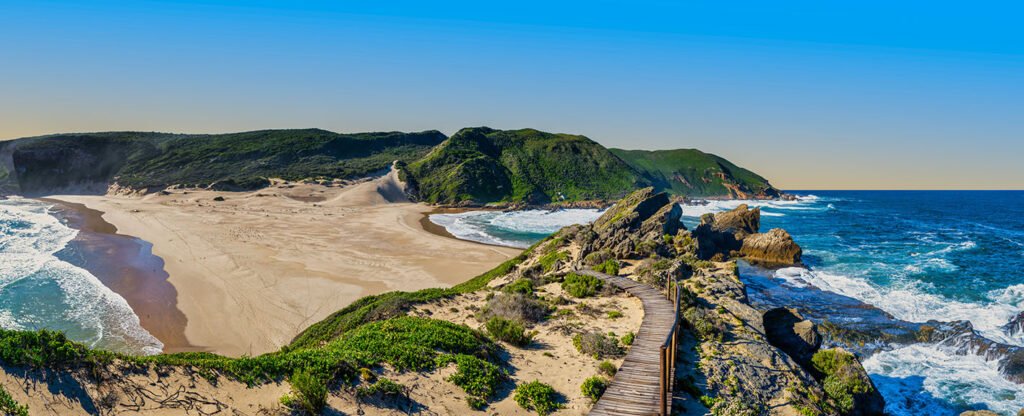
Robberg Nature Reserve
Robberg Nature Reserve stretches along a rocky peninsula 8 kilometers south of Plettenberg Bay, offering three distinct hiking trails that range from 30 minutes to 4 hours. The reserve serves as a protected marine area where visitors regularly spot Cape fur seals, dolphins, and southern right whales during breeding season.
Hiking Routes and Coastal Views
The reserve offers three circular trails that cater to different fitness levels and time commitments. The Gap Circuit covers 2.1 kilometers in about 30 minutes, leading hikers through a mudstone cleft that shows evidence of Gondwanaland's breakup 120 million years ago. The Witsand Circuit extends 5.5 kilometers and takes approximately 2 hours, following the northern ridge past the seal colony before reaching a climbing-falling dune.
The Point Circuit spans 9.2 kilometers and requires about 4 hours to complete. This trail heads along the north ridge to the peninsula's tip before returning via the southern rocky shoreline. Hikers must wear proper walking shoes, sunblock, and hats on all routes.
Trail Requirements:
- Entry fee: R75 for adults, R55 for children
- Operating hours: 7am-8pm (December) or 7am-6pm (May-September)
- No entry permitted after 5pm or 7pm depending on season
- Three viewing decks with picnic facilities and water points
The trails provide views across Plettenberg Bay to the Tsitsikamma Mountains. The reserve sits 146 meters above sea level at its highest point, where the Cape Seal Lighthouse marks the highest navigational light on South Africa's coastline.
Wildlife Watching: Seals, Dolphins, and Whales
The Robberg Peninsula hosts a large colony of Cape fur seals along its rocky shores. Hikers on the Witsand and Point circuits pass directly above these seals, offering close viewing opportunities from the clifftop paths.
Southern right whales visit the waters surrounding Robberg Nature Reserve from June to November for breeding and calving. Visitors can observe these whales from the peninsula's viewing points during these months. Dolphins appear throughout the year in the waters around the reserve.
The protected marine area extends 1.8 kilometers offshore from the peninsula. This zone protects various fish species and marine life. Rock and surf angling require permits obtained before arrival, while boat fishing and spear fishing are prohibited.
The reserve also supports bird populations including kelp gulls, gannets, cormorants, and terns. A kelp gull nursery operates on the peninsula, with boardwalks positioned away from nesting areas to minimize disturbance.
Nelson Bay Cave and Archaeological Discoveries
Nelson Bay Cave sits on the Robberg Peninsula and contains archaeological evidence spanning thousands of years of human habitation. The cave provides insights into how early coastal communities lived and adapted to changing environments along South Africa's southern coast.
The site has yielded stone tools, animal bones, and shell middens that document the relationship between ancient peoples and marine resources. These archaeological layers help researchers understand climate changes and human survival strategies during different periods.
Visitors can view the cave site while hiking the trails, though the main archaeological work occurs during controlled research periods. The combination of natural beauty and historical significance contributes to the reserve's status as a protected area and national monument.